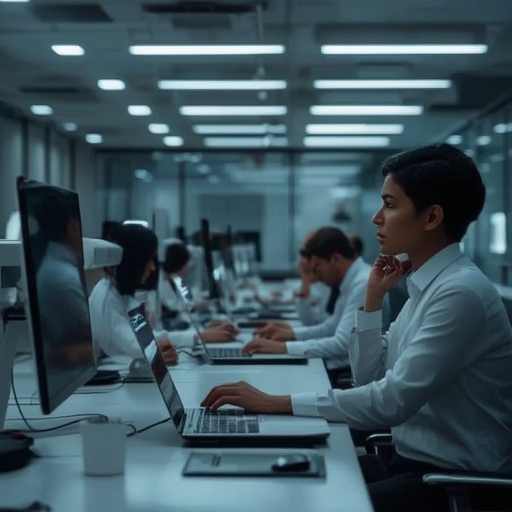
In the developing landscape of modern work culture, artificial intelligence stands as an unrelenting force — immune to fatigue, impervious to stress, and consistently operational. Machines function without the need for rest, emotional recovery, or mental rejuvenation, performing tasks with an almost ominous steadiness that humans, bound by biology and emotion, cannot replicate. This new paradigm is not merely technological; it is psychological and cultural, quietly redefining what society perceives as the ideal state of productivity.
For generations, the notion of a productive worker was intimately tied to human rhythm — periods of focus followed by fatigue, the need for sleep, moments of creativity, and inevitable rest. With AI systems capable of working continuously, that rhythm is being challenged. Algorithms do not pause or second-guess, and they never reach the point of burnout. This unwavering pace has heralded an era in which the benchmark for performance seems artificially elevated, setting a standard of relentless output that people increasingly struggle to meet.
In workplaces around the world, leaders are embracing AI to enhance operational efficiency, automate tasks, and analyze data at speeds beyond human comprehension. Yet, in the process, many organizations are unconsciously comparing the human workforce to these untiring digital entities. Employees begin to internalize machine-like expectations: constant connectivity, uninterrupted availability, and near-perfect precision. The irony is profound — as artificial intelligence liberates industries from inefficiency, it inadvertently enslaves many professionals to unrealistic ideals.
The psychological toll of this cultural shift is subtle but significant. When individuals measure their worth against something that does not experience exhaustion, anxiety, or self-doubt, the result is a collective sense of inadequacy. Mental health challenges, burnout, and diminishing work-life balance reflect an acute misalignment between human capability and mechanical performance. Machines are engineered to optimize; humans are designed to adapt, to rest, and ultimately, to err — it is in those imperfections that creativity, empathy, and innovation reside.
To sustain both productivity and well-being, organizations and leaders must begin to reimagine success through a more humane lens. Integrating AI should not mean expecting people to emulate synthetic endurance. Rather, it should invite a conversation about balance — how technology and humanity can coexist symbiotically, each complementing the other’s strengths. A system that values conscious rest, emotional intelligence, and meaningful contribution over mere output will prove not only more ethical but more sustainable.
Artificial intelligence may not get tired, but human beings, with all their cognitive depth and emotional nuance, remain irreplaceable in shaping judgment, empathy, and creative strategy. The future of work, therefore, should not be about competing with machines, but about redefining productivity in a way that honors human limitations while engaging technological support wisely. Only by acknowledging these differences can we cultivate workplaces that are not just efficient, but genuinely humane in their pursuit of progress.
Sourse: https://www.businessinsider.com/ai-impact-on-jobs-rising-expectations-workers-2026-4


