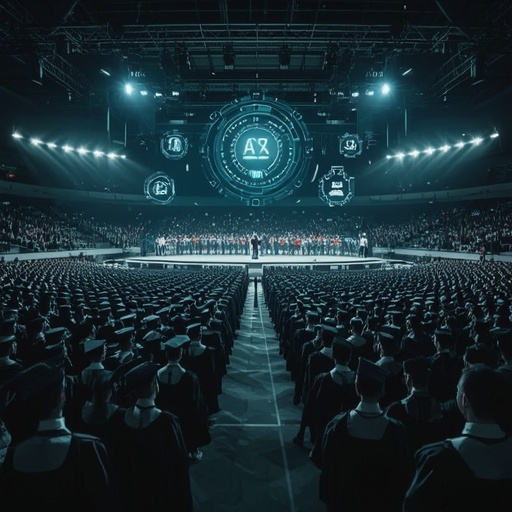
At the University of Arizona’s commencement ceremony, what was expected to be a celebratory acknowledgment of innovation and technological progress transformed into a striking moment of dissent. When the speech shifted to a spirited endorsement of artificial intelligence, the atmosphere changed dramatically as the graduates’ applause gave way to audible boos. This unexpected reaction offered a revealing snapshot of the current cultural divide surrounding artificial intelligence — a technology championed as the engine of tomorrow yet often perceived by younger generations as a source of uncertainty and displacement in their professional futures.
The scene encapsulated the complexities of modern optimism about technology. For many in attendance, the speaker’s praise for AI represented not inspiration but a reminder of the economic and ethical challenges that dominate discussions about automation and employment. The graduating students, standing on the precipice of their careers, found themselves confronting a paradox: they are the very generation expected to lead in an AI-driven economy while simultaneously fearing the instability this transformation brings. Their reaction was therefore not merely emotional but symbolic — a collective, spontaneous critique of the uneven intersection between innovation and human livelihood.
This moment also exposed a broader narrative unfolding across universities and industries alike. Corporate and academic leaders often champion AI as an inevitable and beneficial revolution. Yet for students stepping into uncertain job markets, such rhetoric can feel disconnected from the realities they face — dwindling entry-level positions, shifting skill demands, and the looming threat of automation replacing rather than empowering labor. The boos, in this context, were not a rejection of technology itself but a demand for accountability: for a vision of progress that includes those who must live and work within it.
Behind the incident lies an essential question: how should institutions balance enthusiasm for technological advancement with empathy for workforce anxiety? The University of Arizona episode underscores that optimism alone is not sufficient. The promise of AI must be coupled with genuine strategies for adaptation, education, and inclusion — measures that ensure innovation uplifts rather than marginalizes. As graduates walked away that day, their reaction resonated as a quiet but profound reminder that progress is most sustainable when it listens as much as it leads.
Sourse: https://www.theverge.com/ai-artificial-intelligence/932203/university-of-arizona-students-boo-eric-schmidt-ai-commencement