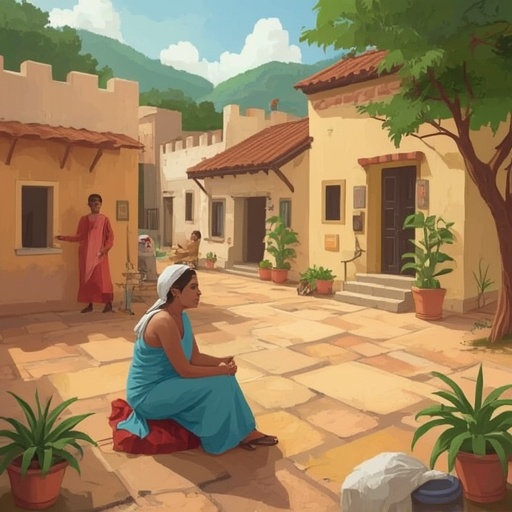
Parenthood, despite often being romanticized as a profoundly rewarding experience, can sometimes feel like an endless and isolating marathon—especially for new parents grappling with the complex demands of early childcare and the emotional turbulence that arises from constant fatigue. After enduring a deeply challenging season of postpartum burnout, I reached a point where exhaustion had eclipsed joy. It was then that a transformative journey abroad offered an awakening: a reminder that parenting, at its healthiest and most sustainable, thrives in the presence of shared care and community.
During this period of depletion, I traveled to India, where everyday life unfolded with a rhythm defined by interdependence and togetherness. In small villages and within tightly woven neighborhoods, I witnessed a culture where parenting was not viewed as a solitary pursuit but rather as a collective responsibility—where grandparents, neighbors, and friends all contributed in small yet meaningful ways to the well‑being of both children and caregivers. Meals were shared, stories exchanged, and responsibilities distributed in a seamless choreography that made nurturing feel natural, not burdensome. This approach contrasted sharply with the hyper‑individualized mindset I had grown accustomed to, one that often glorifies doing everything alone under the guise of strength or competence.
As I immersed myself in this unfamiliar yet profoundly comforting way of life, I began to unlearn the quiet expectation that good parenting means perpetual self‑sacrifice. I discovered that genuine care for a child must coexist with care for oneself and that community—far from diminishing a parent’s role—amplifies it by creating a supportive network where empathy and resilience can flourish. This realization was both tender and radical: it taught me that rest is not indulgence but restoration, and connection is not distraction but sustenance.
When I returned home, I carried these lessons with me like sacred truths. I started rebuilding my life around them, intentionally inviting others into my parenting journey—friends who could lend a listening ear, family who could share the load, and fellow parents who understood the quiet ache of burnout. Slowly, balance returned where depletion once ruled. I learned to measure success not by how much I could endure but by how deeply I could connect, both with my child and with the community around us.
This experience redefined what it means to be a parent. True strength lies not in isolation but in interconnection; healing does not arise solely from doing more, but from allowing yourself to rest and to be held by others. Parenthood, I realized, is not a test of endurance but a tapestry of relationships stitched together through shared compassion, cultural wisdom, and the courage to acknowledge our human need for support.
Today, my parenting philosophy is centered on that principle: together is always stronger. Community has become both my anchor and my compass—a living reminder that balance is found not in having it all under control but in belonging to something larger than oneself, where love, care, and presence intertwine to create harmony for both parent and child alike.
Sourse: https://www.businessinsider.com/trip-to-india-changed-parenting-postpartum-2026-5