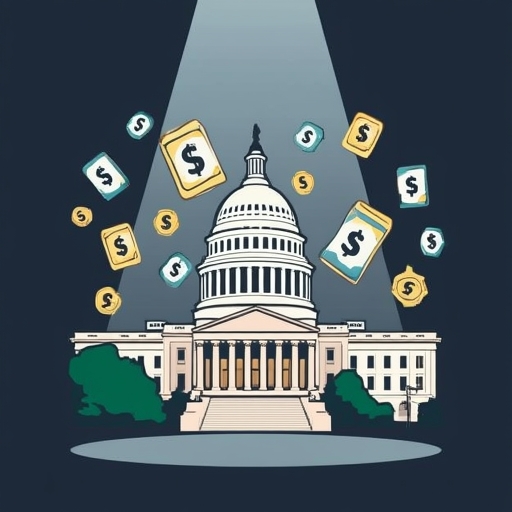
A significant ethical shift is emerging within the halls of Congress as Representative Seth Moulton takes a decisive step toward restoring and reinforcing public confidence in government operations. By explicitly prohibiting his congressional staff from taking part in online prediction markets—digital platforms that allow users to place wagers on future political outcomes—Moulton draws a clear distinction between permissible personal activities and behaviors that may pose conflicts of interest or ethical concerns. This move, although seemingly narrow in scope, reflects a growing national dialogue about transparency, fairness, and trust at the intersection of politics and financial speculation.
Prediction markets, often viewed as experimental tools for gauging collective intelligence or forecasting events, have recently become more accessible through emerging technology platforms. However, when individuals working directly within government institutions begin to participate, questions naturally arise about whether insider knowledge, even unintentionally, could influence outcomes or create perceptions of bias. In this light, Moulton’s proactive ban symbolizes not merely an administrative restriction but a moral stance—a declaration that public servants must hold themselves to higher standards of integrity than those assumed in the private sector.
The implications of this new policy extend beyond Moulton’s own office. It invites congressional peers and policymakers to evaluate whether similar guidelines should be formally codified across Capitol Hill. By articulating this boundary so publicly, Moulton effectively challenges both colleagues and the public to reconsider how ethical norms within government can evolve to meet the demands of a changing technological and financial landscape. In essence, his action underscores the principle that the credibility of democratic institutions depends as much on appearances of ethical consistency as on adherence to the law itself.
As the debate around accountability and reform continues, this initiative may serve as a catalyst for broader discussions about the ethical responsibilities of those in positions of trust. Should all lawmakers, aides, and officials abstain from activities that intersect personal gain with professional influence? Should codes of conduct modernize to anticipate new forms of digital engagement and financial innovation? Moulton’s decision does not provide definitive answers, but it does reignite crucial questions about maintaining integrity within political institutions. His example illustrates that ethical leadership often begins not with sweeping legislation but through deliberate, values-based choices that demonstrate commitment to public service and moral clarity.
Sourse: https://www.businessinsider.com/lawmakers-staff-ban-prediction-markets-2026-4