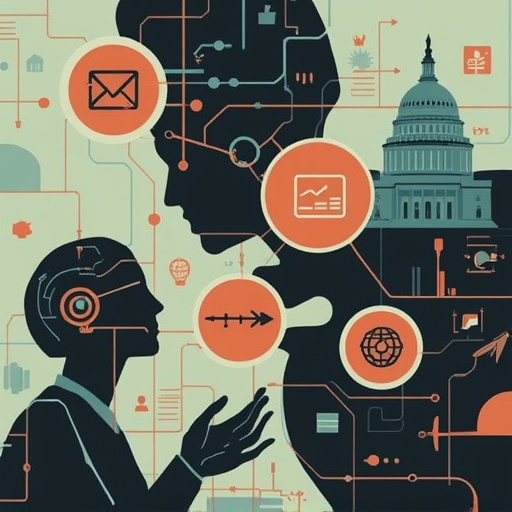
In a striking development that underscores the delicate balance between technological collaboration and governmental transparency, the official government webpage that once detailed its artificial intelligence (AI) vetting partnerships with industry titans Google, xAI, and Microsoft has quietly and inexplicably vanished from public view. This digital disappearance has swiftly become a focal point of debate among policy experts, technologists, and advocates for open governance, many of whom see it as emblematic of broader tensions surrounding oversight and accountability in the age of advanced AI integration.
Originally, the omitted page served as an explicit acknowledgment of cooperation between the public sector and leading private entities specializing in artificial intelligence. It outlined frameworks for so-called ‘information-sharing’ agreements—arrangements that were heralded as critical for ensuring secure, responsible innovation in machine learning and automated decision systems. These partnerships implied mutual vetting processes, where the government sought to validate AI tools and algorithms used in civic, defense, or administrative contexts, while simultaneously benefiting from the technical expertise of these major corporate actors.
However, the sudden removal of such documentation now casts an unsettling shadow over the very principles of transparency and public accountability that these initiatives were purportedly designed to uphold. In modern democratic governance—particularly in matters as transformative as artificial intelligence—the expectation of openness is foundational. When details of strategic relationships with global technology firms disappear without explanation, citizens and watchdog organizations naturally question both motive and method. Was it a simple bureaucratic oversight, or does it reflect a deeper inclination to obscure elements of policy negotiation, data handling, or evaluative criteria?
This missing webpage also reignites the perennial conversation about the boundaries between openness and confidentiality in government–tech collaborations. On one hand, sensitive AI-related undertakings often necessitate a degree of discretion to protect national security interests, proprietary information, or the integrity of emergent technologies still under review. On the other hand, lack of accessible documentation erodes public trust, fuels speculation, and potentially undermines democratic legitimacy in regulatory decision-making. The challenge, therefore, lies in achieving a nuanced equilibrium: sharing enough to maintain confidence and oversight, while safeguarding operational confidentiality.
Furthermore, this occurrence vividly illustrates the broader problem of the digital record’s fragility in the information era. Official communications, policy pages, and archival materials—once viewed as reliable, enduring sources of truth—can now vanish with a single update, server migration, or administrative edit. Such impermanence underscores the importance of robust data stewardship, historical archiving, and independent monitoring of governmental online transparency.
The implications extend beyond mere optics. If contractual understandings around AI risk management, testing standards, or ethical evaluation are no longer accessible, the public loses a vital mechanism for informed discourse and scrutiny. In contexts where AI already intersects with justice, defense, and social services, opacity can have real societal consequences.
In summation, the unnoticed disappearance of this government page is more than a routine technical anomaly—it is a cautionary episode about the fragility of institutional transparency in an era defined by both accelerated technological progress and increasing public demand for accountability. Whether the result of administrative error or calculated omission, the event reinforces the urgent need for clear, accessible, and traceable public documentation wherever artificial intelligence meets policy. Only through sustained openness, precise communication, and verifiable records can governments maintain the trust essential for responsibly navigating AI’s rapidly evolving frontier.
Sourse: https://gizmodo.com/the-governments-page-about-its-ai-vetting-deals-with-google-xai-and-microsoft-is-missing-from-its-website-2000757356