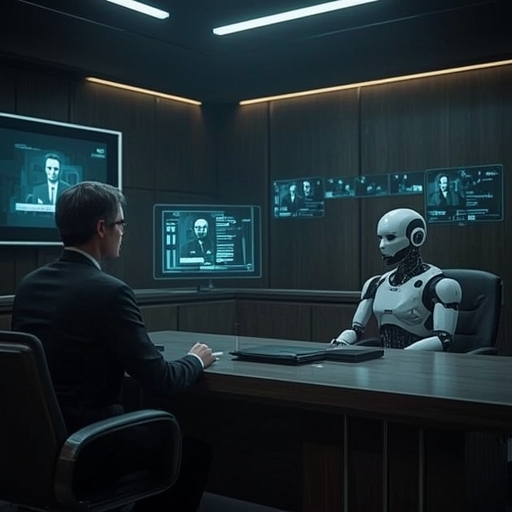
In a recent courtroom exchange that blurred the line between technological optimism and science‑fiction drama, a federal judge reportedly urged a high‑profile technology executive to moderate his remarks about a looming ‘robot apocalypse.’ The advice came while the entrepreneur was testifying regarding the reorganization of a well‑known artificial‑intelligence project into a for‑profit enterprise. What initially might have seemed like another routine legal proceeding quickly evolved into a striking commentary on the social storylines that shape our understanding of AI.
This episode underscores how easily narratives about intelligent machines, when infused with either doomsday imagery or utopian hope, can spill beyond the laboratory or boardroom and influence discussions about accountability, governance, and ethics. The judge’s interjection served as a subtle yet powerful reminder that courtroom testimony demands precision and restraint, quite unlike the speculative tone often welcome in conference keynotes or tech summits. In that setting, exaggeration and metaphor can inspire investment and public excitement; in a court of law, however, such rhetoric risks obfuscating facts and intentions.
The event also illuminates a paradox surrounding artificial intelligence. Society simultaneously celebrates it as a revolutionary frontier of human ingenuity and fears it as a potential agent of disruption or loss of control. The so‑called ‘robot apocalypse’ trope embodies these anxieties, simplifying complex philosophical and technical debates into vivid, emotionally charged language. By cautioning the witness, the judge implicitly called for a more measured dialogue—one that separates creative speculation from the verifiable realities of how AI organizations evolve, monetize, and exert influence.
Beyond the immediate drama of the exchange, the moment reflects a broader cultural tension: the need to balance visionary ambition with grounded responsibility. As AI systems grow increasingly sophisticated and integrated into daily life, their leaders and spokespeople bear heightened responsibility for how their messages shape public confidence and policy. The courtroom became, in this instance, both a literal and symbolic venue for that dialogue—a place where not only legal frameworks but also ethical narratives are tested and redefined.
Ultimately, the scene reminds us that innovation flourishes best when coupled with thoughtful communication. While imaginative conjecture has always driven technological progress, grounding those visions in realism ensures that public trust and regulatory legitimacy keep pace. At the intersection of law, technology, and storytelling, even talk of a ‘robot apocalypse’ must yield to the discipline of reasoned discourse. Such measured engagement will determine whether the future of artificial intelligence unfolds as catastrophe, as miracle, or—more plausibly—as a carefully negotiated human endeavor.
Sourse: https://www.businessinsider.com/judge-elon-musk-stop-robot-apocalypse-ai-terminator-extinction-talk-2026-4


