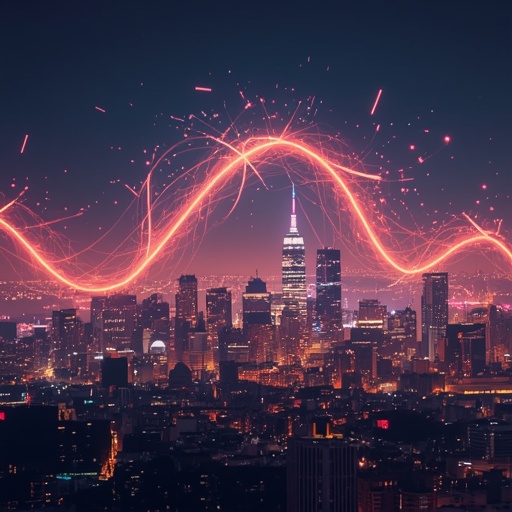
For generations, San Francisco has served as both a cradle of innovation and a canvas upon which each new technological revolution has painted its vision of the future. From the glimmering promise of the Gold Rush to the feverish rise of the dot-com boom, the city has repeatedly adapted to influxes of fortune and the social upheaval that often follows. Yet today, San Francisco stands before a transformation of unprecedented depth and velocity—one driven not merely by commerce or connectivity, but by artificial intelligence itself. This new surge of digital prosperity is not an ordinary economic wave; it is a paradigm shift capable of reconfiguring the city’s very identity.
In this emerging era, AI-fueled enterprises are infusing the local economy with immense capital, while simultaneously reshaping the urban landscape. Once humbly lined with boutique startups, neighborhoods like SoMa and Mission Bay now teem with developers, investors, and data scientists pursuing breakthroughs that promise to redefine human productivity. The city’s architecture of opportunity expands rapidly upward, yet beneath this momentum lies an undercurrent of unease. History teaches that every boom brings both creation and displacement, both innovation and inequality. As self-driving labs hum and algorithmic ventures prosper, the question intensifies: is San Francisco prepared to sustain inclusive growth amidst this accelerating prosperity, or will it again find itself entangled in the social rifts that defined earlier booms?
The AI revolution magnifies all the city’s characteristic contradictions. On one hand, it reinforces San Francisco’s status as the epicenter of technological imagination—a magnet for visionaries who see no boundary between code and creativity. On the other, it exposes deep challenges: the rising cost of living, displacement of long-term residents, and the growing tension between the virtual and the visceral, between those who shape the digital frontier and those left standing outside its gates. These disparities invite renewed contemplation about what constitutes real progress. Will machine learning and automation democratize opportunity or consolidate advantage in the hands of a few?
San Francisco’s legacy has always hinged on adaptation. Each era of prosperity has demanded that the city reimagine its social contract and civic infrastructure. The AI era calls for a similar reinvention—one that balances the exhilaration of discovery with a renewed commitment to equity and sustainability. The city’s leaders, entrepreneurs, and citizens alike must envision policies that translate technological brilliance into shared well-being. To thrive, rather than merely survive this wealth tsunami, San Francisco must channel innovation not only into algorithms and start-ups, but also into more humane systems—affordable housing, inclusive education, and resilient public institutions.
As the glow of AI illuminates every sector—from finance and health care to urban planning and art—the city stands as both laboratory and lesson for the world. Its experience will exemplify how creativity, capital, and conscience can coalesce—or collide—when technology moves faster than society’s ability to respond. The ultimate question is no longer whether San Francisco will participate in the AI revolution, but whether it can harness this new wealth to build a more balanced, thoughtful, and enduring future. 🌉💡
Sourse: https://www.businessinsider.com/san-francisco-billionaires-anthropic-openai-wealth-gap-2026-7