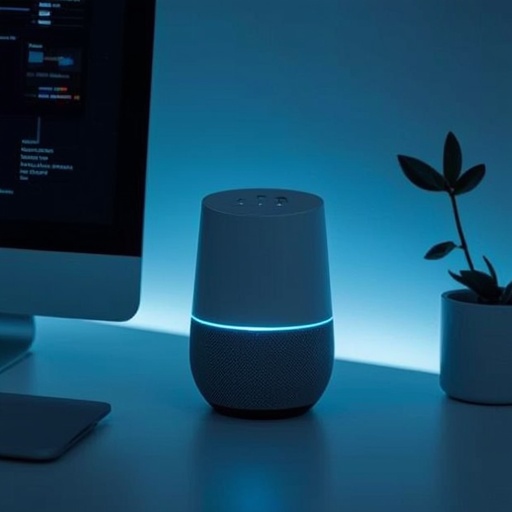
For months, technologists and AI enthusiasts have speculated about the elusive OpenAI hardware project—a product shrouded in mystery, rumors, and unconfirmed leaks. Now, emerging reports seem to suggest that the long-awaited device may not be some radical new form of artificial intelligence, but rather a highly sophisticated iteration of a familiar household object: a smart speaker. While that revelation might initially sound anticlimactic, the truth may be far more nuanced and promising than it first appears.
The idea of a smart speaker might conjure images of common consumer devices such as Amazon’s Alexa or Google Home—functional, but hardly groundbreaking. Yet, if OpenAI’s signature advanced conversational intelligence were to be placed inside such a form factor, the potential implications could redefine the relationship between humans and machines. Imagine a device capable of not only responding to commands but also engaging in deeply contextual dialogue, adapting to tone and intent with a degree of sensitivity that previous assistants have lacked. Through this lens, the simplicity of a speaker becomes its greatest strategic advantage: it offers a seamless, always-present entry point for human-AI interaction.
Beyond the novelty of its shape or technological specifications, what matters most is integration. OpenAI’s conversational models have already proven their capability in understanding nuance, processing complex reasoning, and generating natural language that often feels remarkably human. Embedding these competencies into a tangible, intuitive device could bring sophisticated AI directly into domestic and professional spaces—kitchens, offices, classrooms—without the intimidating barrier of complex interfaces or screens. Such democratization of advanced intelligence could mark a historic pivot point in how society harnesses digital cognition.
Nevertheless, critics might see this as a missed opportunity for more ambitious innovation, questioning whether another voice-operated assistant could truly be transformative. Yet history has shown that great revolutions sometimes arise not from sudden leaps but from subtle refinements that unlock new layers of utility. Just as early smartphones initially appeared to be incremental improvements on mobile phones before evolving into indispensable extensions of human capability, this seemingly modest move by OpenAI could lay the groundwork for a far broader paradigm shift.
Ultimately, the forthcoming OpenAI device—if it is indeed a next-generation smart speaker—embodies a paradoxical blend of simplicity and forward-thinking design. It suggests that the future of artificial intelligence may not depend on radical novelty, but on thoughtful integration: technology that listens, reasons, and participates naturally in our daily rhythms. Whether viewed as an evolutionary step or as a quiet revolution, one truth remains: even the simplest form, when powered by profound intelligence, can make the loudest impact.
Sourse: https://gizmodo.com/the-openai-mystery-device-will-reportedly-be-basically-just-a-smart-speaker-2000785660