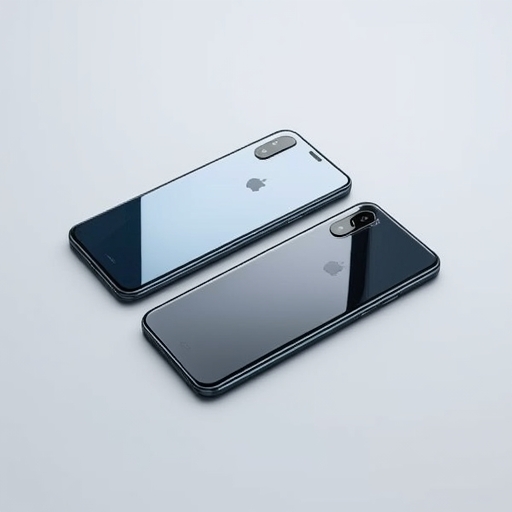
Although these models may not dominate global sales charts, it would be a mistake to underestimate the numerous advantages that accompany the ownership of an exceptionally slim and lightweight smartphone. Devices like the Apple iPhone Air and Samsung Galaxy S25 Edge stand as striking examples of how design evolution can merge practicality with aesthetic precision. Their notably reduced mass provides a more comfortable grip, minimizing hand fatigue during extended use while also projecting an air of refined minimalism. Beyond physical comfort, their visual elegance appeals to users who value sophisticated industrial design. These two models represent not only the present pinnacle of ultra-thin smartphone engineering but also the technological groundwork upon which future foldable innovations—such as the Galaxy Z Fold 7 and the much-discussed iPhone Fold—will be constructed.
However, the appeal of slenderness inevitably provokes a critical question: does adopting such a streamlined device mean sacrificing too many essential features? When the iPhone Air and Galaxy S25 Edge are placed side by side, would their combined thickness even exceed the dimensions of more conventional flagship handsets such as the iPhone 17, Galaxy S25, or the recently introduced Galaxy S26? Furthermore, can their meticulously reduced profiles overcome the traditional compromises that accompany thin designs—namely diminished battery capacity, reduced camera performance, or limited acoustic resonance? These trade-offs have long haunted attempts to miniaturize devices without undermining functionality. In this analysis, I will dissect the specifications, assess the engineering decisions, and perform a detailed numerical and experiential comparison to reveal how these phones balance form and function.
For those considering a purchase, the iPhone Air begins at a base price of $999. Prospective buyers can consult our comprehensive order guide, which details how to acquire the phone at no cost through carrier promotions, as well as a curated list of the most attractive limited-time deals. Similarly, if the Galaxy S25 Edge catches your eye, we provide a full breakdown of which operators and retail partners currently offer the best discounts and trade-in opportunities.
At $999, the iPhone Air fills the position once occupied by the iPhone 16 Plus. It now becomes Apple’s solitary large-screen model that surpasses the iPhone 17 in size without entering the Pro segment. By contrast, Samsung’s Galaxy S25 Edge launches at a slightly higher $1,100, joining its flagship siblings—the Galaxy S26 and S26 Ultra—within the company’s 2025 lineup. The modest $101 price gap likely reflects Samsung’s effort to capture the attention of style-conscious consumers eager for something distinctive, though early sales already show considerable promotional markdowns. Despite fluctuating trade policies and tariffs introduced during the Trump era, both devices’ pricing structures have remained surprisingly stable.
Feature-wise, the iPhone Air occupies an interesting middle ground. It offers fewer rear cameras than the iPhone 17, emphasizing simplicity over multiple lenses. Yet, it compensates with a generous 6.5-inch display, Apple’s powerful A19 Pro processor, and a standard storage capacity of 256GB—ensuring performance and storage are far from compromised. Apple’s pricing strategy, consistent since the days of the original MacBook Air, mirrors its view that minimalist design improvements justify premium cost. The very first MacBook Air, famously thin enough to slip into an office envelope, cost $1,799 despite underwhelming specifications compared to its peers. Only after several generations did it transition into Apple’s entry-level laptop at a $999 price—an interesting parallel to this current iPhone Air positioning.
Turning to physical proportions, neither company markets its products as bulky—yet even within the world of svelte designs, distinctions exist. Excluding the raised camera modules (which Apple euphemistically calls the “plateau”), the iPhone Air measures just 5.64mm in thickness. Samsung’s Galaxy S25 Edge is marginally thicker at 5.8mm. These measurements become more impressive when one recalls that the standard iPhone 17 sits at 7.9mm and the Galaxy S25 at 7.2mm. Though the numbers suggest only a millimeter or two in difference, in hand the impact feels significant, lending both devices an unmistakably sleek impression. Comparatively, when the two are stacked together—camera protrusions excluded—the combined depth measures 11.44mm, oddly reminiscent of the original 2007 iPhone’s 11.6mm frame.
In terms of weight, both manufacturers managed to preserve a delicate balance between thinness and substance. The iPhone Air weighs 165 grams, shedding about 12 grams compared to the iPhone 17. The Galaxy S25 Edge clocks in at 163 grams, almost identical to its standard S25 counterpart at 162 grams. Holding either device feels like handling technology distilled to its essence—solid enough to communicate quality, yet notably effortless to carry. Size-wise, the iPhone Air stands slightly shorter and narrower (156.2 × 74.7mm) compared to Samsung’s 158.2 × 75.6mm frame, meaning both fit comfortably in one hand without sacrificing screen real estate.
Display technology remains one of the primary differentiators between these two contenders. Apple equips the iPhone Air with a 6.5-inch Super Retina XDR OLED panel boasting a crisp resolution of 2,736 × 1,260 pixels and a density of 460 ppi. Impressively, it can reach a peak brightness of 3,000 nits in strong sunlight, ensuring outdoor visibility, while dimming down to a single nit to preserve battery life and visual comfort in darkness. Samsung counters with its signature brilliance: a 6.7-inch QHD+ Dynamic AMOLED 2X display with a denser 3,120 × 1,440 resolution, yielding 513 ppi. Its brightness peaks at 2,600 nits—slightly less luminous than Apple’s figure but still remarkable. Both screens incorporate adaptive 120Hz refresh rates, making navigation, scrolling, and gaming fluid and immersive.
Camera configurations reveal divergent design philosophies. The iPhone Air houses a singular 48‑megapixel wide-angle lens with an f/1.6 aperture, leveraging pixel-binning technology to create 24‑megapixel composite images that balance light and detail. It even delivers 2x “digital telephoto” shots through intelligent sensor cropping rather than a secondary lens. Samsung takes a bolder approach with multi-lens flexibility: the S25 Edge carries a dominant 200‑megapixel primary sensor accompanied by a 12‑megapixel ultrawide. Though lacking a dedicated telephoto module, its cropped zoom works similarly, offering 12‑megapixel 2x images. On the front, Apple introduces a unique 18‑megapixel selfie camera with a square sensor enabling automatic aspect ratio adjustments—a feature branded “Center Stage.” This allows the camera to reframe naturally whether shooting a solo portrait or including friends without rotating the phone. Samsung’s 12‑megapixel front camera adheres to a more conventional 4:3 ratio.
Battery endurance is a perennial concern for ultrathin designs, and both manufacturers navigate this challenge with careful balancing acts. Apple abstains from disclosing the iPhone Air’s exact capacity but promotes “all-day battery life,” claiming up to 27 hours of continuous video playback. Real-world testing reveals a full day of moderate use with about 20% charge remaining, though heavy users may deplete it within 12 hours. Apple also sells a proprietary MagSafe battery pack that magnetically attaches to the phone’s rear, extending video playback to approximately 40 hours. Samsung equips the S25 Edge with a 3,900mAh cell rated for around 24 hours of video use. In practice, performance aligns closely with Apple’s—sufficient for a typical day but requiring nightly recharging. Both devices support rapid charging technology capable of replenishing roughly half their capacity in 30 minutes via a 20W or greater wired adapter.
Performance-wise, Apple’s iPhone Air is powered by the formidable A19 Pro chip, identical to that of the iPhone 17 Pro series and fully optimized for the latest iOS 26 operating system. While Apple does not officially confirm its memory configuration, it is presumed to carry 8GB of RAM—adequate to support emerging on-device AI functionalities under the Apple Intelligence framework. Storage options begin at 256GB, scaling up to 512GB or 1TB for users with extensive multimedia libraries. The Galaxy S25 Edge features Qualcomm’s Snapdragon 8 Elite processor, paired with 12GB of RAM and either 256GB or 512GB of UFS storage. It ships with Android 15 layered by Samsung’s refined One UI 7 interface, complete with integrated Galaxy AI and Google’s Gemini-based generative tools.
Side by side, both phones exemplify cutting-edge craftsmanship and forward-looking design. Apple’s offering emphasizes seamless hardware-software integration, aluminum precision, and understated sophistication. Samsung, conversely, highlights engineering bravado—pioneering materials, an expansive visual experience, and absolute mastery over AMOLED display technology. Whether one values Apple’s cohesive ecosystem or Samsung’s relentless pursuit of technical versatility ultimately depends on personal priorities: elegance versus expansiveness, controlled minimalism versus expressive capability. In essence, the iPhone Air and Galaxy S25 Edge embody two distinct yet equally ambitious visions of what the ideal ultra-thin smartphone can become.
Sourse: https://www.cnet.com/tech/mobile/thin-phones-head-to-head-iphone-air-vs-galaxy-s25-edge/


