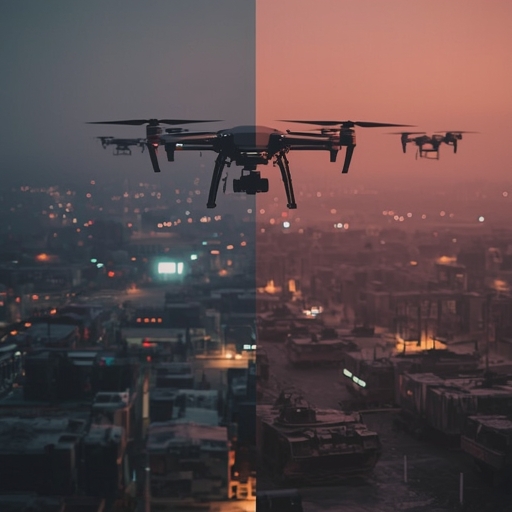
Throughout their early years, drones embodied the very essence of creativity, exploration, and human ingenuity. They soared as symbols of progress, used by artists, researchers, filmmakers, and innovators to push the boundaries of possibility within civilian airspace. The skies buzzed with experimentation — from capturing breathtaking aerial cinematography to studying fragile ecosystems or revolutionizing logistics. However, the landscape of innovation has changed dramatically. With the United States imposing stringent restrictions that have effectively forced DJI, the world’s leading consumer drone manufacturer, to withdraw from its market, the vibrant hum of civilian drone use has grown silent. In place of imaginative enterprise and artistic creation, the air has taken on a different tone — quieter for private creators yet resounding with the mechanical pulse of defense machinery.
This regulatory shift, while framed as a matter of national security, has inadvertently redefined the relationship between technology and creativity. Once a catalyst for entrepreneurship and cross-industry collaboration, the drone now stands as an emblem of geopolitical tension and strategic control. Civilian innovators — photographers charting unseen terrains, engineers designing greener delivery networks, educators teaching the next generation of technologists — find themselves grounded. Meanwhile, military programs flourish, converting the same flight technologies once used for art and science into instruments of surveillance and precision warfare. The result is a paradox: a technological triumph that fuels conflict rather than imagination.
This evolution compels us to ask a profound question: when invention becomes a tool of power instead of progress, who truly benefits? The trajectory drones are taking mirrors the broader dynamic between innovation and militarization — a balance precariously tilted. As creative industries lose access to key hardware and software, the flow of experimentation stalls, and the spirit of open innovation stifles under the weight of geopolitical agendas. What was once a sky filled with creative ambition now mirrors a battlefield of competing interests.
Yet this moment of uncertainty also carries a hidden opportunity. It invites policy leaders, technologists, and creators to reimagine the purpose of drone technology — not merely as a strategic asset, but as a shared space where advancement serves humanity, collaboration, and peace. The future of aerial innovation depends upon whether we can restore that balance between imagination and defense, between invention for creation and invention for domination. It challenges us to decide: will the skies of tomorrow echo with the hum of creativity, or the distant drone of conflict?
Sourse: https://www.theverge.com/news/906306/fcc-drone-ban-who-will-replace-dji-in-us-antigravity-hoverair-skydio


